



Iron fallout, tar and tree sap each need a different active ingredient
In June a car loves to sit in the shade — and that's exactly where the trouble starts. Sticky drops of sap off the lime tree, a few red-brown specks on light paint, a black tar haze behind the wheel arch. A customer put it to us in those exact words recently: "Does it get tar off without damaging the paint?" The honest answer: only if you reach for the right product for the right kind of contamination.
Removing iron fallout, lifting tar and sap: paint decontamination clears the deposits a normal wash leaves behind. It splits into three classes — organic like tree sap and tar, metallic like iron fallout, and firmly embedded. Each class calls for a different active ingredient, in a set order.
Decontamination is what's left after the wash
Paint decontamination is the targeted removal of deposits that are firmly bonded to the paint and won't come off with shampoo and a wash mitt. A wash removes loose dirt. Decontamination removes what has burnt in, glued itself on or anchored itself chemically.
You feel the difference with your hand. After the wash, run your fingertips over the dry paint — wherever it feels rough and gritty instead of glass-smooth, you've got foreign particles sitting on the clearcoat. That's brake-dust particles with an iron core, industrial fallout, hardened little sap droplets or tar spatter. Barely visible, but you feel it straight away.
Why this is more than cosmetics: a lot of these deposits keep working. Tree sap and bird droppings carry organic acids that can etch into the clearcoat in sun and heat — fresh sap wipes off in minutes, baked-on sap leaves dull halos after a few weeks. Iron particles from fallout oxidise and expand, and they settle especially on light paint as red-brown specks. Leave them sitting and you'll be treating damage later instead of dirt.
That's why decontamination comes at the start of any serious detail — after the wash, before polishing or sealing. A freshly washed but contaminated car isn't finished. It's only clean on the surface.
In early summer this hits several times over. Pollen lays a fine film over the paint, limes and other broadleaf trees drip sticky sap, and the brakes throw off more iron dust in dry weather. Park under trees in June and you collect in two weeks what would take two months in winter. That's exactly the moment a thorough decontamination pays off most.
Three kinds of contamination, three active ingredients
Deposits fall roughly into three groups, and each reacts to a different chemistry. Use one product for everything and you'll fail on at least two thirds of the cases.
The first group is organic: tree sap, tar, bitumen, insect remains, adhesive residue from films. It's sticky and solvent-sensitive. The Koch-Chemie Orange Power Op works here through natural orange extracts (d-limonene) and lifts sap, tar, rubber and glue without attacking solvent-proof paint. On paint, glass, ceramic and metal it's right at home.
The second group is metallic: iron fallout and brake dust with an iron core. It sits as red-brown dots on light paint and as a dark film on the wheel. No solvent helps here — you need a reactive iron remover: the Koch-Chemie Reactive Rust Remover Rrr binds the iron particles chemically and turns them water-soluble — you see it in the purple colour change.
The third group is firmly embedded: industrial fallout and the finest particles that stay behind as a rough film after washing and chemistry. You take these off mechanically with a clay bar or a clay pad, always on well-lubricated, wet paint. Chemistry lifts nothing here, because the particles are neither organic nor iron-based — they're simply stuck.
The thinking error is nearly always the same: one product is meant to do it all. But a solvent leaves iron untouched, an iron remover leaves sap untouched, and a clay bar only takes off what's mechanically within reach. Only the combination covers the whole spectrum. That's why every serious detailing shelf holds at least two chemical removers plus a clay bar — not one universal bottle that does everything a bit and nothing properly.

The choice comes down to the substrate, not the stain
Before you reach for a bottle, it's not just the contamination that counts but the surface underneath. The same deposit takes a different amount of punishment on paint, glass or polished alu — and that's exactly where it's decided whether the job stays clean or leaves a mark.
The most important point is coating compatibility. If you've got a ceramic coating or a wax on the paint, you don't want to strip it off while removing a patch of sap. The Rrr works pH-neutral and doesn't attack intact coatings — which also makes it usable for regular iron removal on coated wheels. The Orange Power is a solvent product: spot it on the sap drop, not all over a fresh coating.
The second point is temperature. Reactive and solvent-based products belong on cool paint in the shade, never in blazing sun. On hot metal the product flashes off before it can react and dries as a haze. That's exactly why we always answer the customer's "without damaging the paint?" the same way: the risk isn't the product, it's the wrong temperature and too long a dwell time.
The third point is the tool. Concentrates and reactive removers need a clean spray head or a separate spray bottle, not a used wheel-cleaner container with leftover chemistry. Tip a pH-neutral iron remover into a bottle with an alkaline residue and you neutralise both.
And the dwell time isn't a guideline to ignore. One to two minutes is enough for most removers; after that you wipe off, you don't add more. If a product dries in because it sat too long or the sun was too strong, you get exactly the haze the customer's question dreads — not from the chemistry itself, but from the forgotten clock. So you only ever work one section that you can genuinely wipe off within that time.
The workflow: wash first, then lift, then protect
Decontamination only works in the right order. Pre-wash first, then the organic removers, then the iron remover, protection at the end — start in the middle and you'll do the work twice.
Step one is the touchless pre-wash. The Koch-Chemie Gentle Snow Foam Gsf sits on the paint as a dense blanket of foam at a pH of around 7.5, softens pollen, dust and loose dirt and rinses them off — wax- and sealant-safe. Baked-on insects or tar it deliberately doesn't touch; that's what the specialist removers are for. Only after this wash is the paint clean enough for you to actually see and feel the real deposits.
Step two is the organic deposits. Spot the Orange Power onto sap and tar drops, let it dwell for one to two minutes and lift it with a soft microfibre cloth — don't rub, lift. Only then comes step three, the iron remover: spray the Rrr onto the cool, washed paint and watch the affected spots turn purple. As long as the colour keeps working, the reaction is running. After a short dwell, rinse thoroughly.
If the paint still feels rough across the surface afterwards, the clay bar slots in between iron remover and protection. Spray on plenty of lube, pull the clay flat and pressure-free over the wet surface, folding it regularly — it picks up the firmly embedded particles that neither foam nor remover caught. The only thing that matters is the lube: pulled too dry, the clay leaves fine scratches, so here go too wet rather than too sparing.
Step four is protection. Decontamination bares the naked clearcoat and inevitably takes the old protective layer with it. A decontaminated car with no fresh sealant is less protected than before. A 1K-Nano paint sealant then seals the surface and makes sure insects, bird droppings and sap come off more easily next time — the easy-to-clean effect here isn't marketing, it's the whole point of the last step.

Our line-up for a clean decontamination
We run decontamination strictly as a Koch-Chemie chain, because the products are matched to each other and don't get in each other's way in sequence. Four products cover the whole process.
The Reactive Rust Remover Rrr is our best-selling iron remover and the go-to against iron fallout on light paint and brake dust on the wheel. Its active ingredient is ammonium mercaptoacetate, the ammonium salt of thioglycolic acid — it reacts specifically with iron(III) oxides and turns purple in the process. Customers rate it 4.65 out of 5 stars on average. It names its own honest limit: it's not built for tar, oil or baked-on race brake dust.
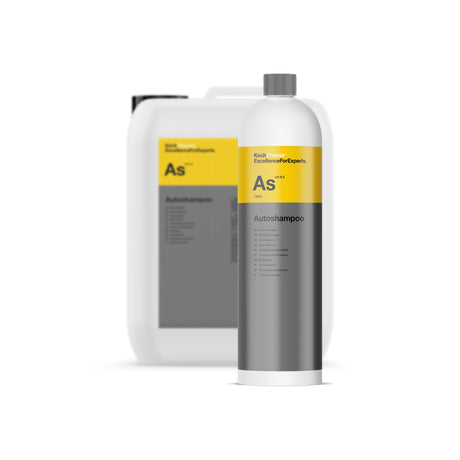
That's exactly where the Orange Power Op takes over, lifting sap, tar, rubber and glue via d-limonene from orange peel. Ahead of it stands the Gentle Snow Foam Gsf as a pH-neutral pre-wash that attacks nothing and clears the paint first. The 1K-Nano paint sealant rounds it off as the protective layer. If you want to go deeper on the wheel side, you'll find the right products in our guide to the right wheel cleaner; the complete Koch-Chemie range sits in our Koch-Chemie category.
You need less than most people think. The 500 ml bottle of the Rrr covers plenty of cars, because you only spray the affected spots rather than flooding the whole car. One litre of Gentle Snow Foam makes many pre-washes through the foam lance. That makes decontamination more a question of many quiet Saturdays than one expensive afternoon — the bottles last longer than first impressions suggest.
These four products aren't a coincidence on the shelf, they're a sequence: soften, lift the organic, lift the iron, protect. Each available on its own, together they make up the decontamination a detailer runs through on a quiet afternoon.
Detailing1 insight: The most common mistake we see on test cars in front of our showroom in Nordhorn is the wrong order: the iron fallout remover goes onto dusty paint before the wash. Then the product reacts with the loose dirt instead of the iron particles and you burn through twice the amount. So if you want to remove iron fallout, you wash first. Only after that the purple colour change — and take that literally: as long as nothing turns purple any more, there's no iron left and more spraying gets you nowhere. On a light-grey test car we cut what looked like three passes down to a single one.
Which product for your problem
In the end the choice comes down to a single look at the paint. What you see and feel tells you which bottle to grab.
If you've got red-brown specks on light paint or a rough film on the wheel, that's iron — then you want to remove the iron fallout, and the Reactive Rust Remover Rrr is the answer, on cool, washed paint with an eye on the purple colour change. If sticky, glossy sap drops sit under the tree or black tar spatter behind the wheel, it's organic — then spot on the Orange Power Op with a short dwell and a soft cloth.
If the whole of the paint feels rough across the surface after the wash without you seeing individual spots, fine industrial and airborne dust is stuck fast — then the clay bar takes off on wet, lubricated paint what chemistry can't grab. And if there's only a yellowish film over everything after pollen season, often the thorough pre-wash with the Gentle Snow Foam is enough before you even reach for the specialist remover.
One rule sits above all the rest: whatever product was on it, the exposed paint wants sealing afterwards. Decontamination without protection is half a job — the paint is clean but defenceless. Keep the order and lay down a sealant at the end and you've got not just clean paint but prepped paint that rides out the next pollen season far more relaxed.

No time for the whole post? Get it summarized: